

Hi everyone, Ogorchukwu here. Unfortunately, I picked up an injury on Sunday, hence the delay in getting out a blog post. Many Uber and Bolt trips, hospital visits and an MRI scan later, I am on the road to recovery. For me, getting an MRI scan was definitely the highlight of the entire journey, so I’m going to tell you my story and give you my take on how to get the scan done without any challenges.
What is an MRI Scan?
According to the official NHS website, Magnetic resonance imaging (MRI) is a type of scan that uses strong magnetic fields and radio waves to produce detailed images of the inside of the body. An MRI scanner is a large tube that contains powerful magnets. You lie inside the tube during the scan. During an MRI scan, you lie on a flat bed that’s moved into the scanner. Depending on what part of your body is getting scanned, you will enter the scanner either head-first or feet-first. Because I was getting a scan on my left knee, I entered the machine feet-first.
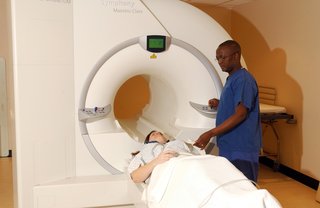
The room itself is very cold, something I regretted instantly due to the fact I wore only a t-shirt and a pair of shorts. The reason why it’s so cold is to help the scanner do its job and avoid malfunctioning at higher temperatures. The MRI scanner is operated by a radiographer, who is trained in carrying out imaging investigations. They control the scanner using a computer, which is in a different room, to keep it away from the magnetic field generated by the scanner. The radiographer who carried out my scan was very helpful and thorough, guiding me on what to do and making sure my knee was properly placed to get the scan done completely, as well as reminding me about the importance of staying still during the scan. She also gave me something to squeeze if I needed to call her attention during the scan, and warned me about the loud noises the scanner would make during the process.
To combat this, she gave me earplugs to help drown out the noise and although they definitely blocked out lots of noise, I still heard the noises loudly as the scan was going on. I’m not sure how long my scan lasted but it was probably about 30 to 45 minutes long, which can seem like a long time to stay still while freezing, but I barely noticed how the time flew by, although my fingers were numb by the time the scan was completed. Typically, the scan lasts 15 to 90 minutes, depending on the size of the area being scanned and how many images are taken. My scan took me about 45 minutes and this was focusing on my left knee alone. However the scanner also took around 300 images of the knee.
How Does The MRI Scan Work?
The human body contains several water molecules, which contain hydrogen atoms. These hydrogen atoms contain protons, which are like tiny magnets. The are very sensitive to magnetic fields. When you lie under the powerful scanner’s magnets, the protons in your body line up in the same direction, in the same way that a magnet can pull the needle of a compass. You will not feel this. Short bursts of radio waves are then sent to certain areas of the body, knocking the protons out of alignment. When the radio waves are turned off, the protons realign. This sends out radio signals, which are picked up by receivers. These signals provide information about the exact location of the protons in the body. They also help to distinguish between the various types of tissue in the body, because the protons in different types of tissue realign at different speeds and produce distinct signals.
An MRI scan is a painless and safe procedure. You may find it uncomfortable if you are claustrophobic, but most people are able to manage it with support from the radiographer. Most modern MRI scanners have a wider tunnel, which can help reduce claustrophobia. Extensive research has also been carried out into whether the magnetic fields and radio waves used during MRI scans pose a risk to the human body, but no evidence has been found to suggest there’s a risk, meaning that MRI scans are one of the safest medical procedures available.
But MRI scans may not be recommended in certain situations. For example, if you have a metal implant fitted, such as a pacemaker or an artificial joint, you may not be able to have an MRI scan. If you’re pregnant, a doctor will discuss with you whether an MRI scan is suitable for you.
My Suggestions For Getting An MRI Scan
Based on my personal experience getting an MRI scan, there are a few things I can suggest that you do to make your experience as easy and straightforward as possible:
- Ask all your questions before the scan starts: If you have any concerns of worries about getting the MRI scan, be sure to clarify your concerns before the scan actually starts. While the scan can be stopped if needed, it’s best for everyone if the scan goes on as long as possible without any interruptions.
- Eat before getting your scan: This is based on my personal advice, but the best course of action is to make sure you’re not hungry before starting the scan. This is mostly because the scan might take a while to complete, and getting hungry while in the machine will probably not be a pleasant experience.
- Get earplugs or ask for them before the scan starts: The scanner is incredibly loud, and you’re going to be in the machine as it makes all this noise. Avoid hearing problems by asking for earplugs from the radiographer or bringing yours if you don’t like to share.
- Use the restroom before getting your scan: The same way you should not be hungry when the scan starts is the same way you should not be pressed to use the restroom when the scan starts.
Conclusion
MRI scans are helpful in looking at the tissue inside the body. They are also very safe and non-invasive. Make sure to ask any questions you have, eat and use the restroom before you have the scan, and get earplugs to limit the noise from the scanner. Have a great week ahead!
Ogorchukwu.


