

May was Mental Health Awareness Month, and we spent those 4 weeks spreading the message of the importance of taking care of your mental health. Mental health is just as important as physical health and should be treated as such. In this article, we will look at mental health and the importance of making sure your mental health is just as good as your physical health.
According to the Centers for Disease Control and Prevention, “Mental health includes our emotional, psychological, and social well-being. It affects how we think, feel, and act. It also helps determine how we handle stress, relate to others, and make healthy choices.” Mental health affects people across all ages, with over 1 in 5 youth (ages 13-18) either currently or at some point during their life, having had a seriously debilitating mental illness. Mental diseases and mental health issues are very common: about 1 in 25 U.S. adults lives with a serious mental illness, such as schizophrenia, bipolar disorder, or major depression. The stigma around mental health and treatment has long existed, even though this has started to change. Still, people hesitate to seek help or even talk about it with their loved ones for fear of being judged and facing unnecessary backlash.
The theme for Mental Health Awareness Month this year is “More than Enough”. It is a gentle reminder that no matter what, you are inherently worthy of more than enough life, love, and healing. Showing up, just as you are, for yourself and the people around you, is more than enough. Your mental health is more than enough reason to prioritize your well-being.
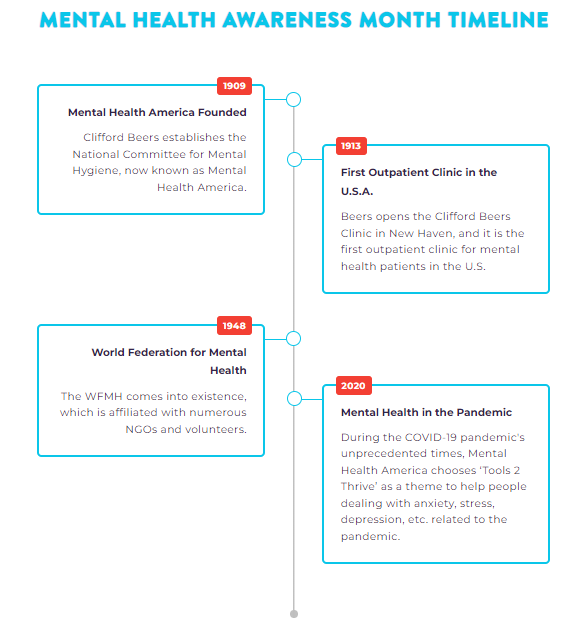
Mental Health Awareness Month was first celebrated in the year 1949. It was commemorated by the Mental Health America organization, which was then known as the National Committee for Mental Hygiene and then later as the National Mental Health Association before it got its current name. The association was founded by Clifford Whittingham Beers, who was born in 1876 in Connecticut as one of five children in his family who all suffered from mental illness and psychological distress. All of them also went on to spend time at mental institutions and it was from his hospital admittance that he discovered that the mental health field had a notorious reputation for malpractice, maltreatment, and immense bias.
Beers went on to author “A Mind That Found Itself”, which is a bestseller even today. Gaining popularity and support from medical professionals, Beers founded the National Committee for Mental Hygiene. Beers and his colleagues at the association wanted to find ways to make sure that mental health patients not only received the right care but also did not feel alone in their fight against mental diseases.
Since 1949, each year, a theme is selected to be highlighted and celebrated throughout May. Recent years have seen themes like ‘Do More for 1 in 4’ (2011), ‘B4Stage4’ (2015), and ‘Nature’ (2021). During the month, various events are held that are covered by the media and well-known figures like politicians and actors. Mental Health America also diligently releases a mental health toolkit for outreach activities.
Causes of Mental Health Issues
Mental health issues arise from a complex interplay of various factors that can impact anyone, regardless of age, gender, or background. While the causes of mental health issues are multifaceted and unique to each individual, it is crucial to acknowledge the underlying factors that contribute to their development. By gaining a better understanding of these causes, we can work towards prevention, early intervention, and effective treatment. Here are some key factors that can contribute to mental health issues:
- Biological Factors: Genetic predisposition and imbalances in brain chemistry can make certain individuals more susceptible to mental health conditions. Family history, chemical imbalances, and alterations in neurotransmitter functioning play significant roles in conditions such as depression, anxiety disorders, bipolar disorder, and schizophrenia.
- Environmental Factors: Experiences and circumstances in one’s environment can impact mental health. Traumatic events, abuse, neglect, or ongoing stress can increase the risk of developing mental health issues. Additionally, factors like socioeconomic status, housing instability, and exposure to violence can contribute to the development or exacerbation of mental health conditions.
- Psychological Factors: Internal psychological processes and personality traits can influence mental health. Low self-esteem, unresolved trauma, negative thinking patterns, perfectionism, and difficulty coping with stress can contribute to the development of conditions like anxiety and depression.
- Social Factors: Social connections, support systems, and social determinants of health are crucial in mental well-being. Isolation, loneliness, discrimination, and social stigma can negatively impact mental health. Relationships, family dynamics, and social support networks play significant roles in either protecting or compromising mental well-being.
- Lifestyle Factors: Unhealthy lifestyle choices, such as substance abuse, poor nutrition, lack of exercise, inadequate sleep, and chronic stress, can contribute to the development or worsening of mental health issues. These factors can disrupt brain function, affect mood regulation, and contribute to overall mental and emotional imbalance.
How to deal with Mental Health Issues
When faced with mental health issues, it’s important to remember that there is hope and support available. Taking proactive steps to address your mental well-being can make a significant difference in your life. Here are some strategies to help you deal with mental health issues:
- Seek Professional Help: Reach out to a mental health professional such as a therapist, counselor, or psychiatrist. They can provide a safe space for you to express your feelings, offer guidance, and develop a personalized treatment plan tailored to your needs.
- Build a Support System: Surround yourself with a network of supportive individuals who understand and empathize with your struggles. Lean on trusted friends, family members, or support groups to share your experiences, receive encouragement, and seek advice.
- Practice Self-Care: Prioritize self-care activities that nurture your overall well-being. Engage in activities that bring you joy, relaxation, and fulfillment. This may include practicing mindfulness, engaging in hobbies, spending time in nature, or pursuing creative outlets.
- Maintain a Healthy Lifestyle: Focus on maintaining a balanced lifestyle that incorporates regular exercise, nutritious eating habits, and sufficient sleep. Physical well-being is closely connected to mental health, and adopting healthy habits can positively impact your mood and overall outlook.
- Practice Stress Management Techniques: Learn and implement stress management techniques that work for you. This may include deep breathing exercises, meditation, yoga, journaling, or engaging in activities that promote relaxation and stress relief.
- Challenge Negative Thoughts: Pay attention to negative thought patterns and challenge them with positive and realistic perspectives. Practice self-compassion and develop a mindset that embraces self-acceptance and resilience.
- Establish Boundaries: Set healthy boundaries in your personal and professional life to protect your mental well-being. Learn to say no when necessary and prioritize your own needs without guilt.
- Engage in Meaningful Connections: Cultivate and maintain healthy relationships that bring you joy and fulfillment. Seek opportunities to connect with others, participate in social activities, and foster a sense of belonging.
- Engage in Regular Self-Reflection: Take time to reflect on your emotions, thoughts, and experiences. Consider journaling, therapy, or mindfulness practices to gain insight into your mental health and make positive changes.
- Be Patient and Kind to Yourself: Healing takes time, so be patient with yourself during the process. Celebrate small victories, practice self-compassion, and remember that it’s okay to ask for help when needed.
Remember, you are not alone in your journey. There is support available, and with time, self-care, and the right resources, you can navigate your way towards improved mental well-being. Your mental health matters, and by taking these steps, you are taking an important stride towards nurturing your well-being. Have a great weekend!


