

World Population Day, observed on July 11th every year, serves as a reminder of the challenges and opportunities associated with global population trends. This day provides a platform to raise awareness about the importance of population issues, including reproductive health, gender equality, and sustainable development. In this article, we will explore the significance of World Population Day and delve into various aspects related to global population dynamics, challenges, and strategies for nurturing sustainable growth and well-being. The theme for this year is, “Unleashing the power of gender equality: Uplifting the voices of women and girls to unlock our world’s infinite possibilities.”
Women and girls make up 49.7% of the global population according to the United Nations, but they are often ignored in discussions on demographics, with their rights constantly violated in population policies. This keeps them out of schools and offices; limits their ability to make decisions about their own lives; and heightens their vulnerability to violence, harmful practices and preventable maternal death, with a woman dying every two minutes due to pregnancy or childbirth. (Source: United Nations)
It is important to advance gender equality even more to create a better, resilient and sustainable world. The creativity, ingenuity, resources and power of women and girls are fundamental to addressing several of the challenges that threaten our future, including climate change and conflict. In this blog post, we will explore the significance of World Population Day and delve into various aspects related to global population dynamics, challenges, and strategies for nurturing sustainable growth and well-being.
Significance of World Population Day
To begin, let’s look at some of the history behind World Population Day. World Population Day was established by the United Nations in 1989. The establishment of this special occasion was inspired by the significance of the World’s population reaching around five billion people on July 11, 1987. The objectives for the establishment of World Population Day were to cater to the global population issues, deal with maternal health, poverty, economic challenges and much more.
The World Population Day serves as a reminder that we can achieve a peaceful and sustainable future envisioned by the Agenda Sustainable Development 2030. The United Nations Populations Funds (UNFPA) brings its data and experiences to support women and girls around the world and gives us an opportunity to highlight the need to advance gender equality to help realize the dreams of all eight billion of us on our planet.
World Population Trends
It took an extremely long time – hundreds of thousands of years – for the world population to grow to 1 billion, and then in roughly another 200 years, it grew seven times in size. By 2011, the global population reached the 7 billion mark, it stood at almost 7.9 billion in 2021, and it’s expected to grow to around 8.5 billion in 2030, 9.7 billion in 2050, and 10.9 billion in 2100. This dramatic growth has been driven largely by increasing numbers of people surviving to reproductive age and has been accompanied by major changes in fertility rates, increasing urbanization and migration. These trends will have far-reaching implications for generations to come.
The last few decades have seen enormous changes in fertility rates and life expectancy. In the early 1970s, women had on average 4.5 children each; by 2015, this number fell below 2.5 children per woman. Meanwhile, average global lifespans have risen, from 64.6 years in the early 1990s to 72.6 years in 2019.
In addition, the world is seeing high levels of urbanization and accelerating migration. 2007 was the first year in which more people lived in urban areas than in rural areas, and by 2050 about 66 per cent of the world population will be living in cities.
These megatrends have far-reaching implications. They affect economic development, employment, income distribution, poverty and social protections. They also affect efforts to ensure universal access to health care, education, housing, sanitation, water, food and energy. To more sustainably address the needs of individuals, policymakers must understand how many people are living on the planet, where they are, how old they are, and how many people will come after them.
Challenges with the Current World Population
The biggest challenge with the current world population is overpopulation: Human population has grown beyond Earth’s sustainable means. We are consuming more resources than our planet can regenerate, with devastating consequences. On 15 November 2022, the world’s population reached 8 billion people, a milestone in human development. While it took the global population 12 years to grow from 7 to 8 billion, it will take approximately 15 years—until 2037— for it to reach 9 billion, a sign that the overall growth rate of the global population is slowing. Yet levels of fertility remain high in some countries. Countries with the highest fertility levels tend to be those with the lowest income per capita. Global population growth has therefore over time become increasingly concentrated among the world’s poorest countries, most of which are in sub-Saharan Africa.
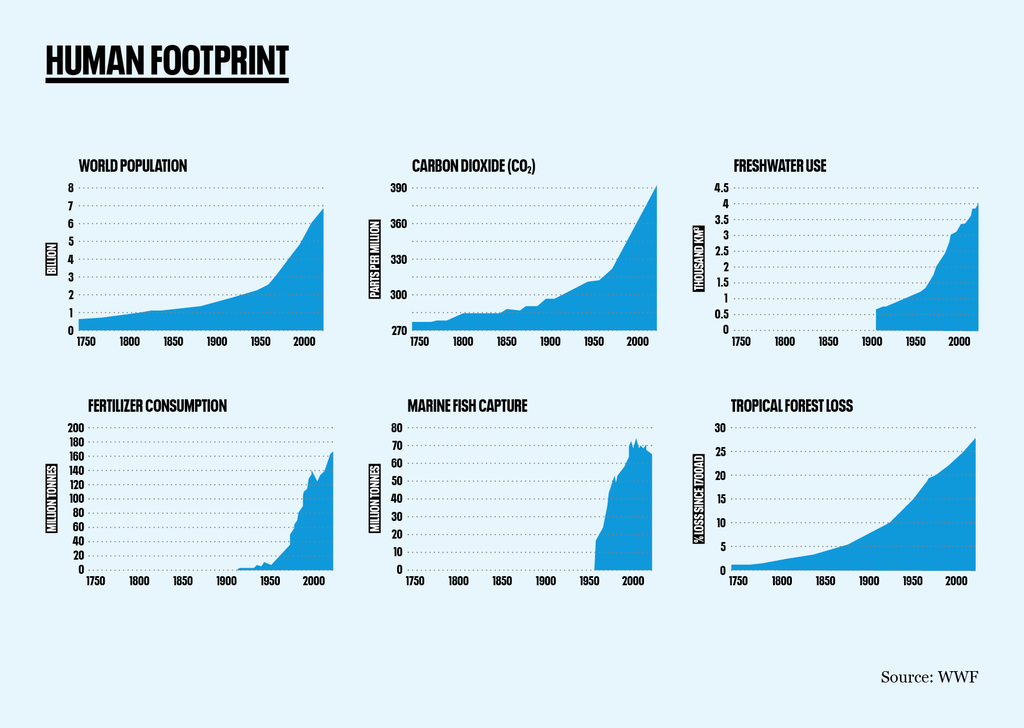
Overpopulation is a complex issue influenced by various factors. While it is important to note that population growth itself is not necessarily negative, as it can also contribute to economic and social development, overpopulation occurs when the population exceeds the carrying capacity of the environment. Some of the causes of overpopulation include:
- High Birth Rates: High fertility rates, especially in regions with limited access to contraception and family planning services, can contribute to population growth. Cultural norms, religious beliefs, and lack of awareness about reproductive health may also influence high birth rates.
- Declining Mortality Rates: Advances in healthcare, sanitation, and medical technology have resulted in reduced mortality rates, particularly in developing countries. Improved access to healthcare, immunization, and disease control measures have led to longer life expectancy, contributing to population growth.
- Lack of Education: Limited access to education, particularly for women, can contribute to higher birth rates. Lack of education may lead to a lack of awareness about family planning methods, reproductive health, and the benefits of smaller family sizes.
- Poverty and Lack of Economic Opportunities: Poverty and inadequate access to economic opportunities can lead to higher birth rates. In some cases, larger families are seen as a means of ensuring economic security, as children may contribute to household labor or income.
- Social and Cultural Factors: Cultural and social factors, such as traditional values, religious beliefs, and societal expectations, can influence family size and reproductive choices. In some cultures, larger families are desired or considered a symbol of status and prestige.
- Lack of Family Planning Services: Limited access to contraception, family planning services, and reproductive healthcare can contribute to higher birth rates. Inadequate availability of these services can hinder individuals’ ability to make informed choices about their reproductive health and family size.
The UN’s projections show that very small changes in the size of families across the globe make an enormous difference – between a population of 7 billion and an unthinkable 16 billion by the end of the century.
We can achieve a sustainable global population when communities, governments and organisations take action to enable people to choose smaller families through women’s empowerment and easy access to high quality education and family planning. By doing so, we can ensure that, in the future, everyone can have a decent standard of living on a healthy planet.
Conclusion
In conclusion, World Population Day serves as a timely reminder of the importance of addressing population-related challenges to foster sustainable growth and well-being. By promoting reproductive health and rights, ensuring gender equality, and aligning population dynamics with the Sustainable Development Goals, we can create a more equitable and sustainable future. Through education, inclusive policies, and international cooperation, we can navigate the complexities of global population trends and work towards nurturing a world where every individual can thrive while preserving the planet for future generations.


